
Community Conservation & Territories of Life
Recognising Indigenous and local community stewardship beyond protected areas
Indigenous Peoples and local communities also care for forests, rivers, fishing grounds, sacred places and ancestral sites. These places support wildlife and natural resources, but they are also closely tied to identity, customary beliefs system, history, food, livelihoods and responsibilities of care passed between generations.
Conservation rooted in place
Along the Segama river, Batu Balos is a sacred limestone forest and ancestral burial site connected to the Dusun peoples of the Segama river, including Bukit Belacon. The forest also provides habitat for gibbons, hornbills and other wildlife. Participatory surveys led by the communities confirm forest areas outside of formally protected areas also sustains biodiversity. Community discussions, mapping and dialogue are helping to clarify how the site can be protected while respecting its cultural significance and the communities connected to it.
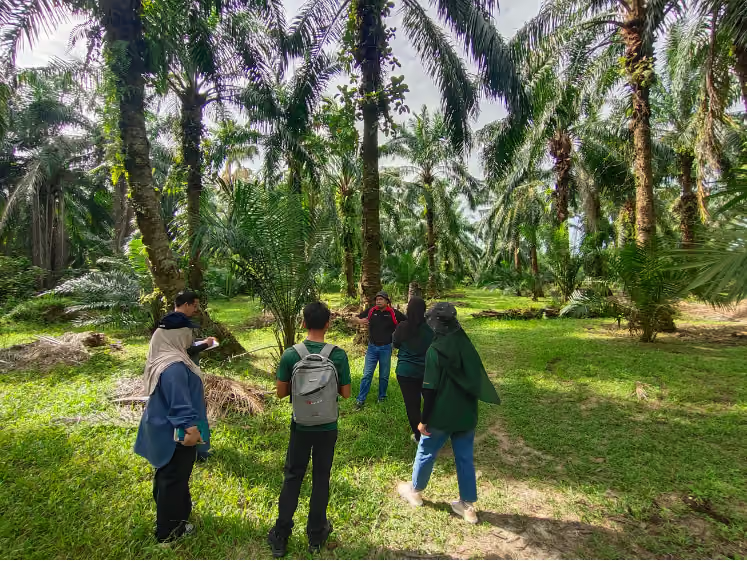
Near the Segama estuary, Kampung Dagat manages a living territory of forests, wetlands, rivers and fishing grounds. The Tidung community has mapped its territory, strengthened adat, monitored great apes and protected their fishing ground by working with neighbouring villages on the management of shared fishing areas. Women and young people also take part in orangutan and phenological studies.
These are practical forms of conservation. They include community rules, local monitoring, protection of sacred places and harvesting of non timber forest products.
Under the Sabah Biodiversity Centre, a framework for identifying and recognizing Other Effective Conservation Measures (OECM) is unfolding in Sabah. The recognition of these communities may provide a formal pathway for qualifying areas outside protected areas and further support existing stewardship, rights and conservation practices of communities within the Segama River Basin.
Our approach
Forever Sabah supports participatory mapping, community protocols, ecological documentation and facilitated grass roots discussions and partnership with local government.

%201.svg)
%201.svg)